

Aqua Feed
Floating • Sinking • Mash — Nursery to Finisher
Advanced aquaculture nutrition from fry to harvest.
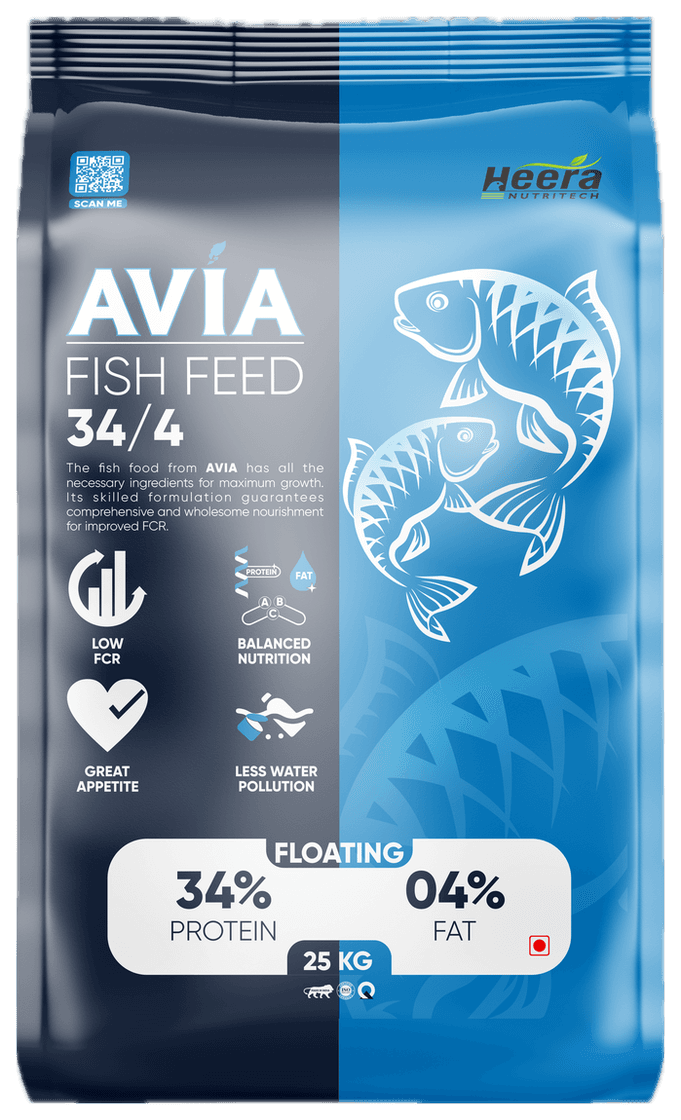
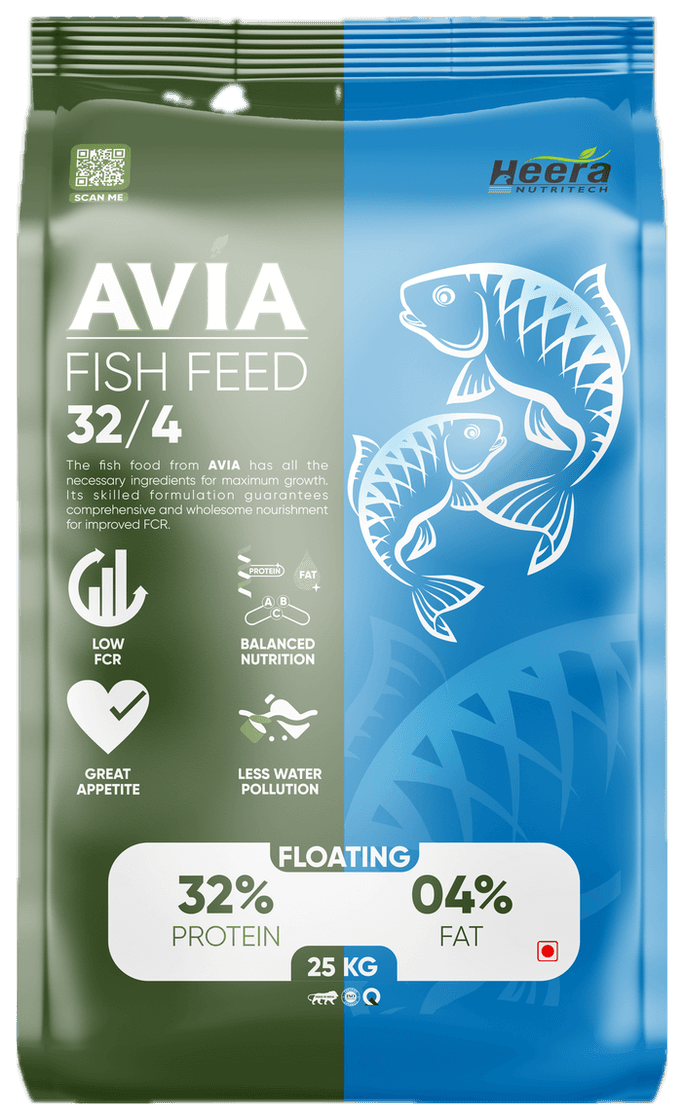
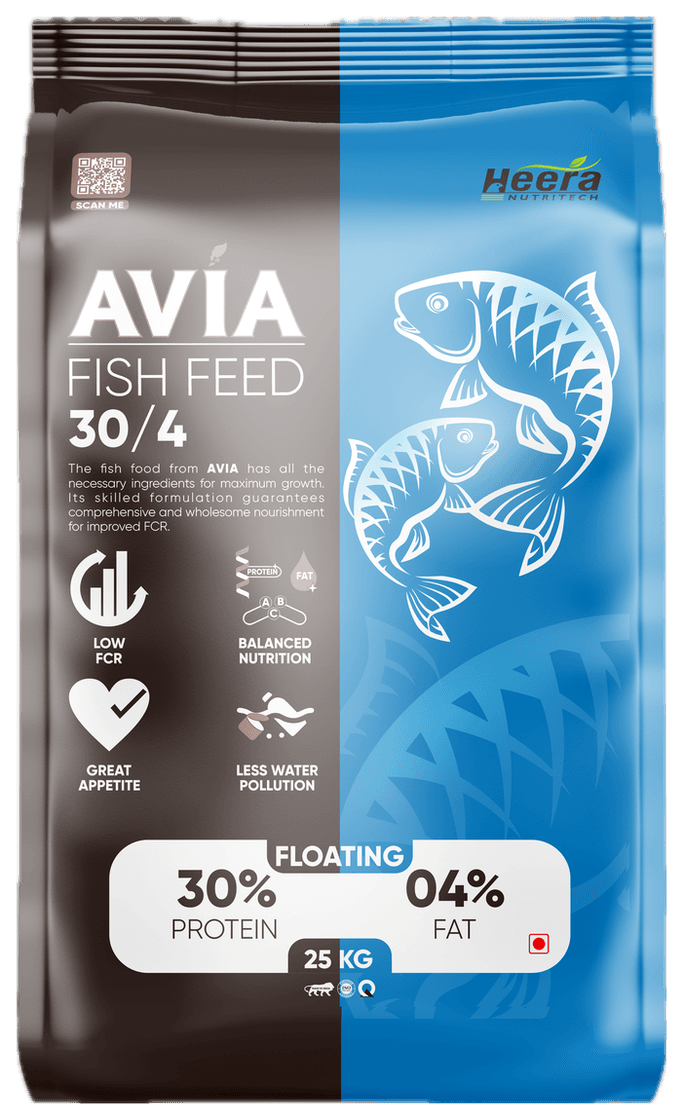
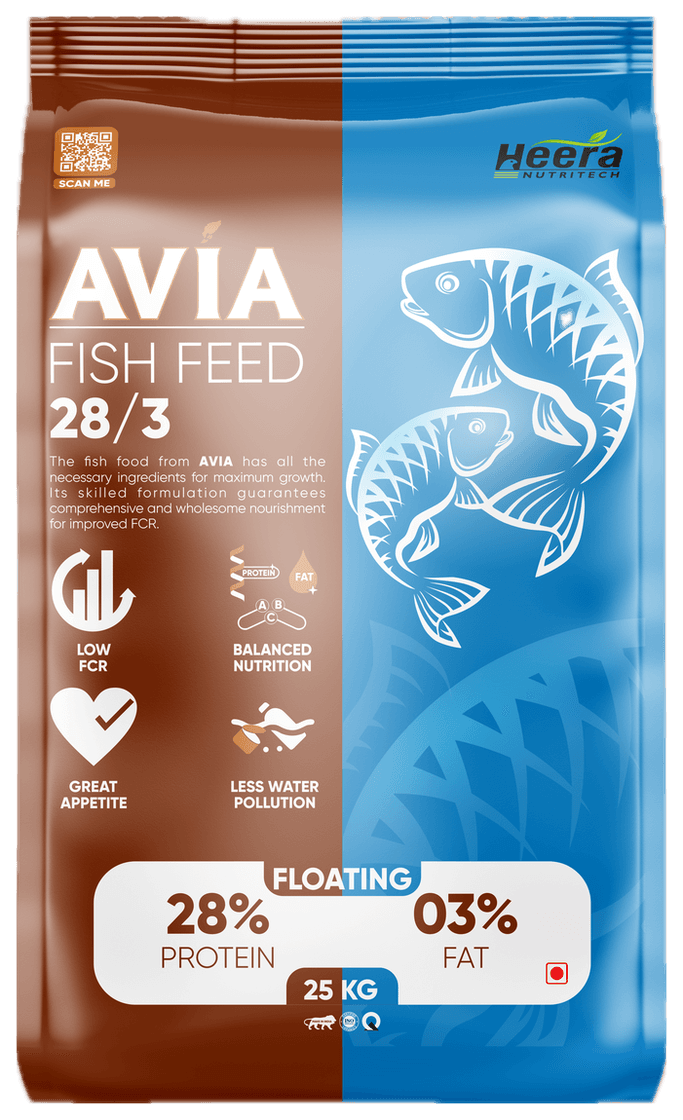
AVIA Fish Feed follows the fish from the nursery stage through grow-out to harvest with four protein/fat grades — 34/4, 32/4, 30/4 and 28/3 — offered as extruded floating feed, sinking pellets and mash / powder, in pellet sizes matched to the growing fish.
- Four grades: 34/4 → 32/4 → 30/4 → 28/3
- Extruded floating, sinking pellet and mash
- Low FCR focus, antibiotic-free
- Water-stable pellets for cleaner ponds
 Poultry
 Cattle
 Pig
 Goat & Sheep
AVIA Fish Feed
Advanced Aquaculture Nutrition from Fry to Harvest
AVIA Fish Feed is a complete aquaculture nutrition range developed for the changing requirements of fish from the early nursery stage through grow-out and final harvest. The range combines high-quality protein, balanced energy, controlled fibre, vitamins and minerals with modern feed-processing technology to support growth, feed utilization and cleaner pond management.
Extruded Floating Feed • Sinking Pellet Feed • Mash / Powder Feed

Products in This Category4
From Fry to Harvest
Better Nutrition. Better Feed Utilization. Better Aquaculture Performance.
The nutritional requirement of fish changes dramatically during the production cycle. AVIA follows that growth with a simple progression — early growth, starter development, grow-out performance and efficient finishing.
Advanced Nutrition. Modern Feed Technology.Better Aquaculture Performance.
AVIA Fish Feed Range
Different stages of fish growth require different levels of protein, energy and pellet size.
| Product | Crude Protein | Crude Fat | Crude Fibre | Moisture | Recommended Positioning |
|---|---|---|---|---|---|
| AVIA 34/4 | Min. 34% | Min. 4% | Max. 5% | Max. 11% | Nursery / Early Starter |
| AVIA 32/4 | Min. 32% | Min. 4% | Max. 5% | Max. 11% | Starter / Fingerling |
| AVIA 30/4 | Min. 30% | Min. 4% | Max. 5% | Max. 11% | Grower |
| AVIA 28/3 | Min. 28% | Min. 3% | Max. 5% | Max. 11% | Finisher / Grow-Out |
Aflatoxin B₁: Max. 20 ppb • Antibiotics: Not added. Feed grade should be selected according to species, fish size, culture system, stocking density, natural pond productivity and target growth.
One Nutrition Range. Three Feed Technologies.
Feed Form Matters as Much as Formulation.
AVIA Fish Feed can be offered in different physical forms depending on the fish species, size, culture system and feeding method.
Extruded Floating Feed
Nutrition you can see working. Floating feed remains visible at the water surface, so the farmer can observe feeding behaviour and adjust quantity to actual consumption — controlled floatability, better feeding control, improved water stability, lower feed wastage and cleaner pond management. Pellet sizes: 1 mm • 2 mm • 3 mm • 4 mm.
Sinking Pellet Feed
Dependable nutrition below the surface, for species and culture systems where fish feed in the middle or lower water column — consistent pellet size, good nutrient distribution, controlled feeding and practical commercial feed economics, in different protein grades.
Mash / Powder Feed
Flexible feeding for early stages and traditional culture systems using feeding trays or bags — suitable for very small fish, with flexible particle size. Offer carefully to avoid excessive dispersion and nutrient loss in water.
How Extrusion Is Redefining Aquaculture Feed
From Simple Feed Pellets to Engineered Nutrition.
During extrusion, the feed passes through a controlled combination of heat, moisture, pressure and mechanical shear. This changes the physical structure of the feed before it is shaped into pellets — giving greater control over how the feed behaves both inside the fish and inside the water.
Better Starch Cooking
Extrusion gelatinizes starch, making it more accessible to digestive enzymes and helping create stronger pellet structure.
Controlled Density
By controlling expansion and density, feed can be designed to float, slow-sink or sink according to the feeding behaviour of the target species.
Better Water Stability
A stronger pellet retains its structure longer, helping reduce nutrient leaching and feed loss in water.
More Uniform Pellets
Controlled processing produces more consistent pellet size, shape and density.
Better Feeding Visibility
Floating feed allows farmers to observe consumption and respond quickly when appetite changes.
Better Feed Economics
When feed is more stable, correctly sized and efficiently consumed, more of what is purchased reaches the fish rather than becoming pond waste.
Feed Size Matters
Fish should be able to consume feed easily without wasting energy or rejecting pellets that are too large.
| Fish Stage | Typical Fish Size / Stage | Recommended Feed Form | Indicative Feed Size |
|---|---|---|---|
| Larval | Up to ~15 days / very small fry | Powder / Fine Granule | ≤0.5 mm |
| Nursery | Fry / early fingerling | Crumble / Micro Pellet | 0.5–1.5 mm |
| Starter | Approx. 5–100 g | Floating / Sinking Pellet | 1.5–3 mm |
| Grower | Approx. 100–500 g | Floating / Sinking Pellet | 3–4 mm |
| Finisher | Above approx. 500 g | Floating / Sinking Pellet | 4 mm and above, as suitable |
Practical Feeding Schedule
Feed According to Biomass — Not Simply Pond Size.
| Stage | AVIA Feed | Feed Rate | Feeding Frequency |
|---|---|---|---|
| Nursery | 34/4 | 6–8% → gradually reduced | 3–4 times/day |
| Starter | 34/4 / 32/4 | 3–5% biomass/day | 2–3 times/day |
| Grower | 30/4 | 2–3% biomass/day | 2 times/day |
| Finisher | 28/3 | 1.5–2.5% biomass/day | 1–2 times/day |
The feeding rate should be adjusted after regular biomass sampling rather than remaining fixed throughout the crop cycle.
Feed Smarter, Not Simply More.
Overfeeding does not necessarily produce faster growth.
Excess feed increases production cost and can deteriorate pond water quality. For better feeding efficiency:
- 1Observe fish response at every feeding.
- 2Reduce feeding when consumption falls.
- 3Sample fish periodically and recalculate biomass.
- 4Adjust pellet size as the fish grow.
- 5Avoid feeding during severe oxygen stress or abnormal fish behaviour.
- 6Maintain adequate dissolved oxygen and good water quality.
- 7Store feed in a cool and dry place.
Why AVIA Fish Feed?
Advanced Processing. Practical Farm Benefits.
High-Quality Protein
Protein levels matched to different growth stages.
Balanced Nutrition
Protein, fat, fibre and micronutrients designed to work together.
Low FCR Focus
Nutrition and processing aimed at efficient utilization of feed.
Excellent Palatability
Designed to encourage consistent feed intake.
Antibiotic-Free
No antibiotics added to the feed.
Better Water Management
Stable feed helps reduce unnecessary feed breakdown and pond loading.
Multiple Feed Forms
Extruded Floating • Sinking Pellet • Mash / Powder.
Multiple Pellet Sizes
Feed size can be matched to the growing fish.
Explore Other Categories
All Categories 5 products
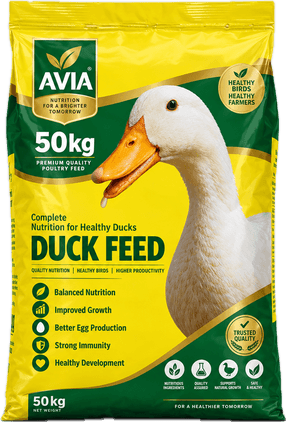
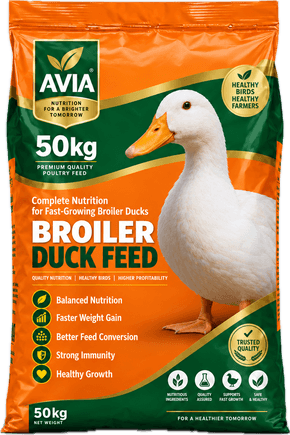
Duck Feed
Egg-Type • Meat-Type • Breeder
Complete nutrition for growth, egg production and performance.
 1 product
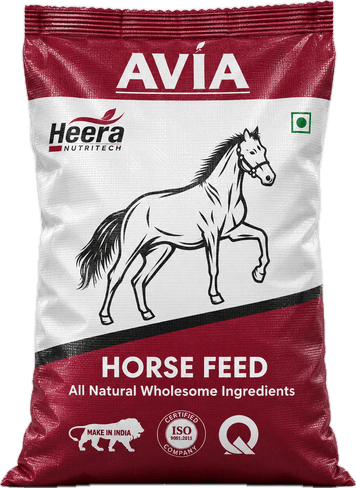
Horse Feed
Maintenance • Growth • Performance • Breeding
Balanced nutrition for strength, condition and performance.
 4 products
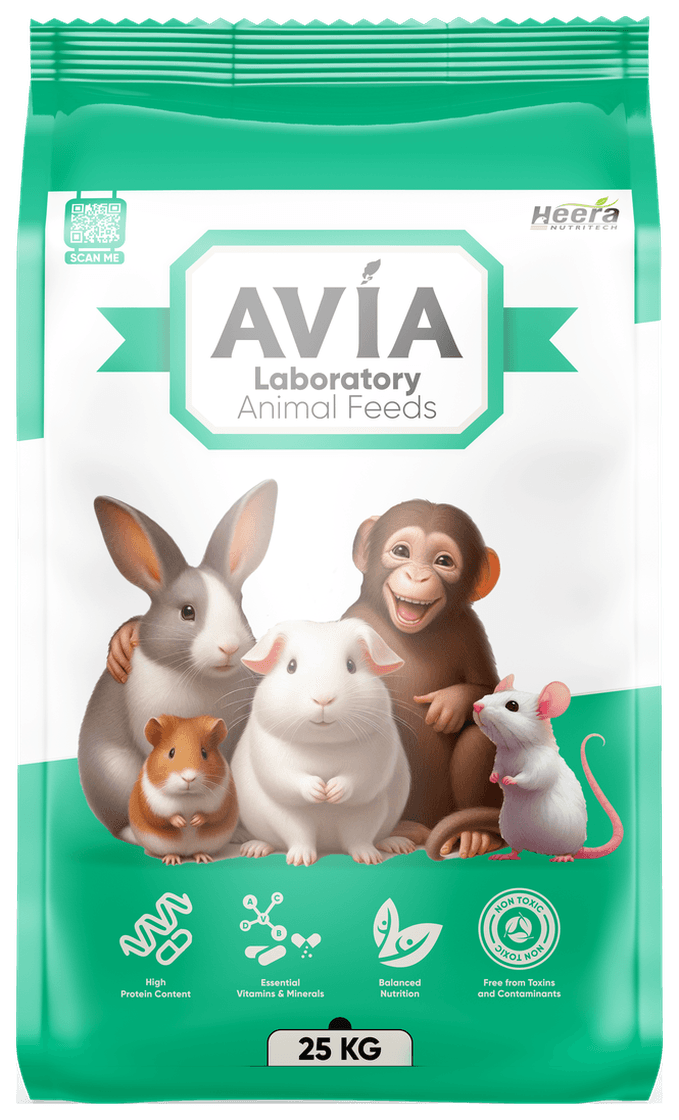
Laboratory Animal Feed
Rat • Mice • Rabbit • Guinea Pig • Research Diets
Controlled nutritional solutions for research and institutional applications.